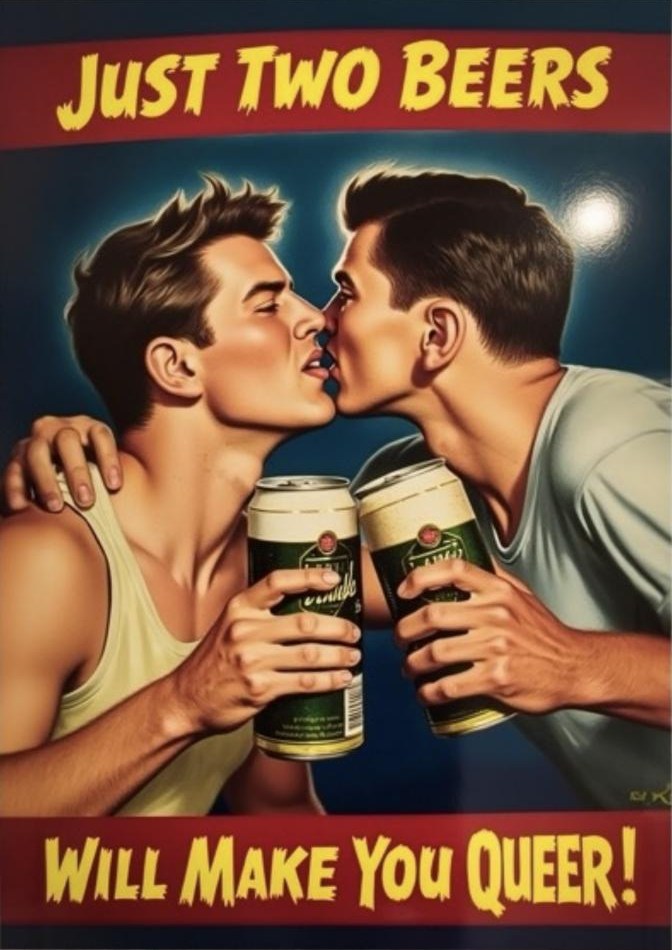
Vintage gay poppers
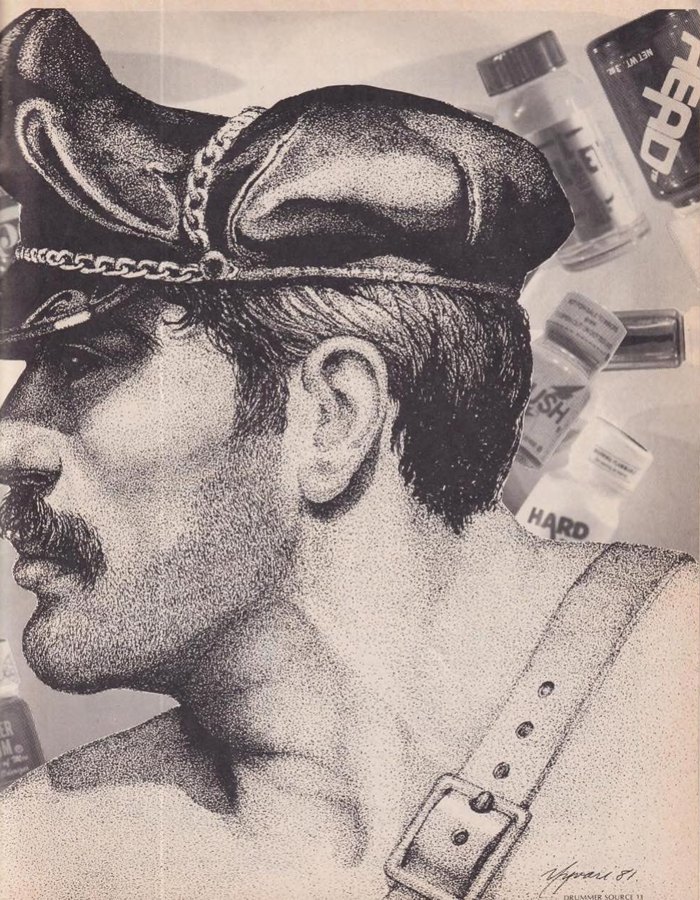
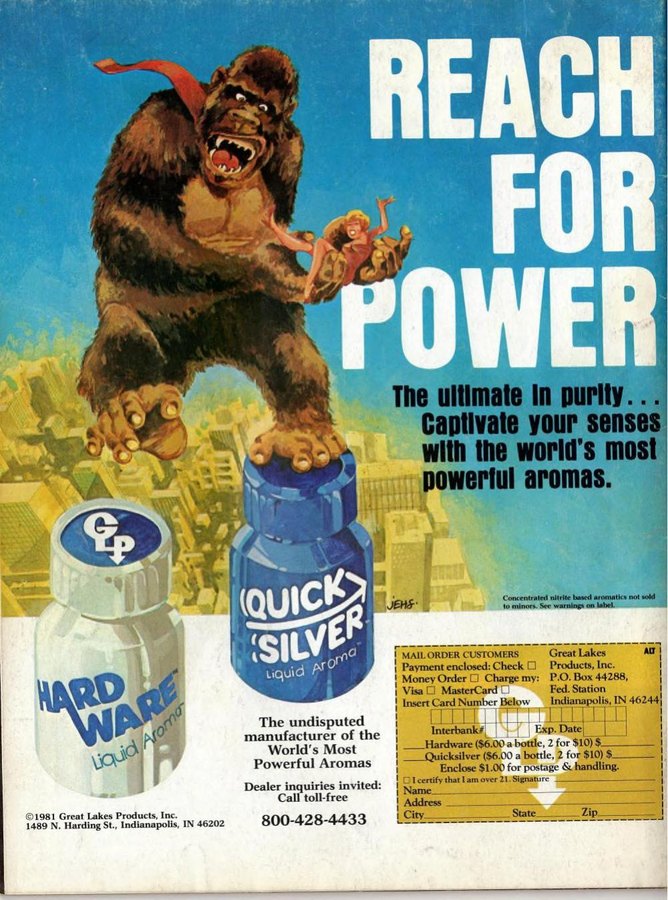
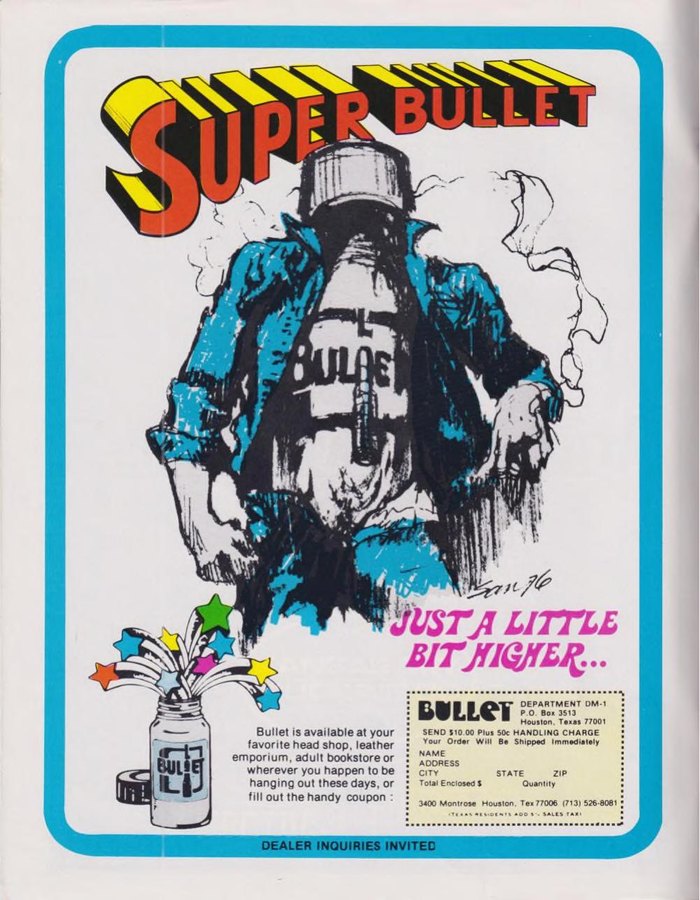
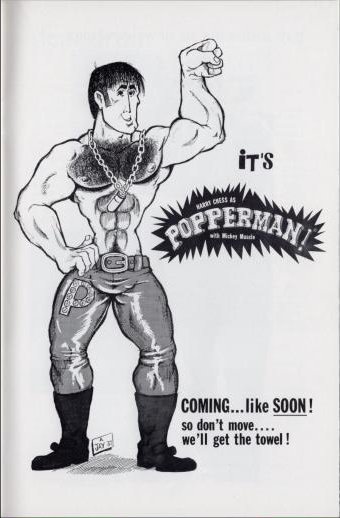
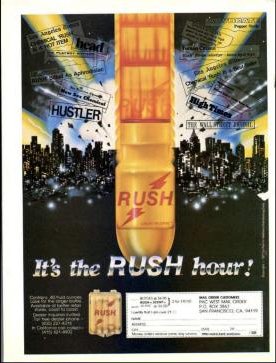
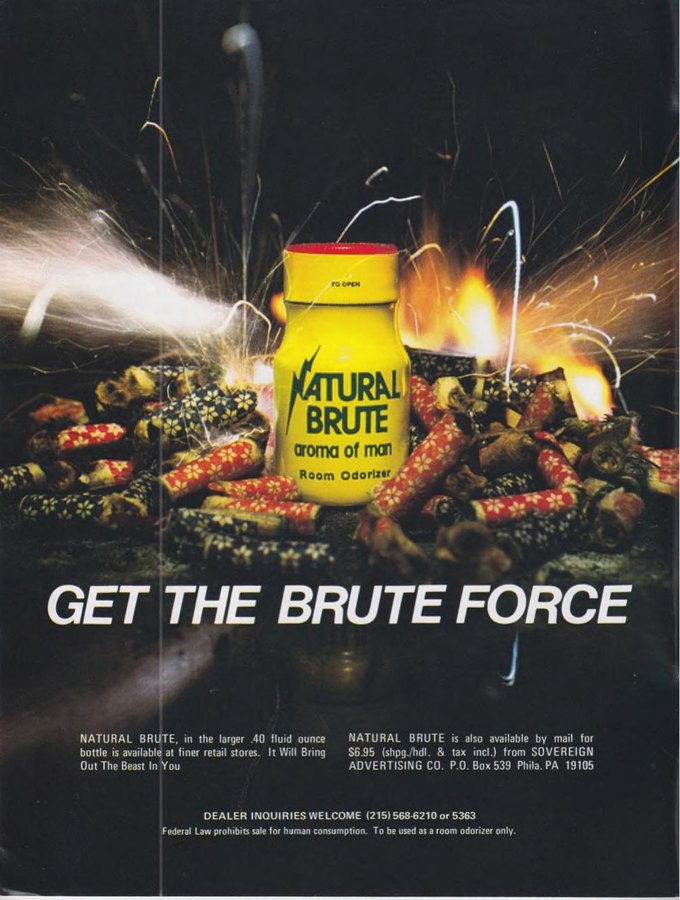
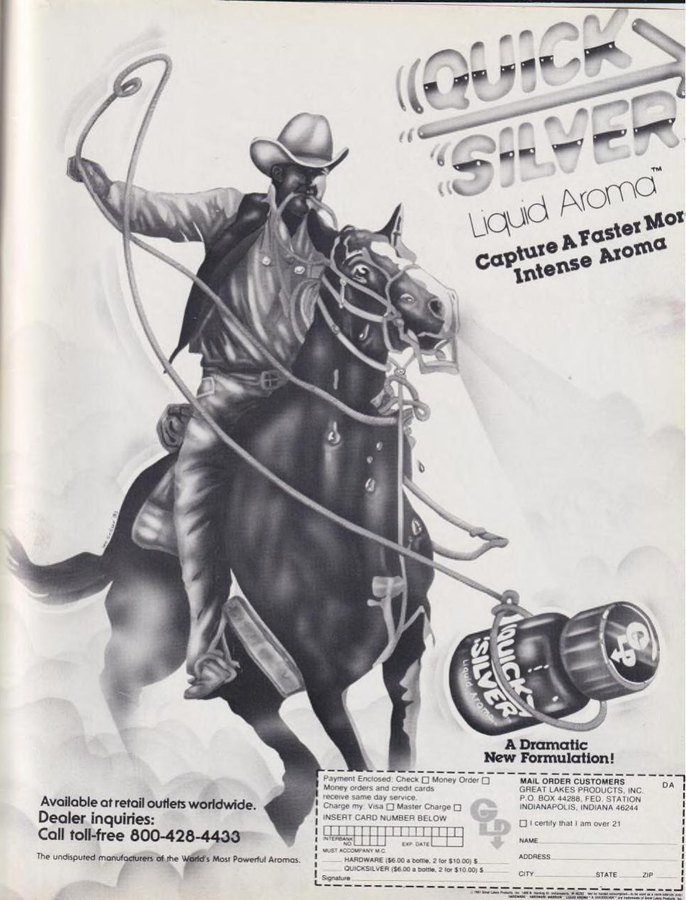
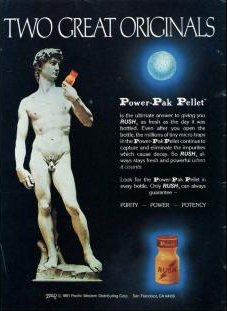
Vintage poppers ads are the comic-book superheroes, cowboys and locker-room scenes that sold amyl and butyl nitrite to gay men in the 1960s, 70s and early 80s. Amyl nitrite had been a heart medicine since 1867, when the Scottish physician Thomas Lauder Brunton used it for angina, and its glass ampoules were crushed to inhale, which gave the drug its nickname. After the FDA made it prescription-only again in 1969, brands such as Locker Room, first sold in Los Angeles, switched to isobutyl nitrite and labeled it a room odorizer; Rush, Bolt and Quicksilver followed, and Rush's maker, Pacific Western, was founded by W. Jay Freezer in 1976. The plates here run from Drum in 1967 to Drummer in 1981, and full-page illustrated ads like these filled the gay press until federal law banned the products in 1988 and 1990.

Quick answers
Why are they called poppers? Amyl nitrite was sold in small glass ampoules wrapped in cloth that were crushed, or popped, to release the vapor. Accounts differ on whether the name came from the crushing or the sound.
Why were poppers sold as room odorizer? After the FDA required a prescription for amyl nitrite again in 1969, makers switched to butyl and isobutyl nitrite and sold them as room odorizers, video head cleaners or leather cleaners to get around drug rules.
When were poppers banned in the US? The Anti-Drug Abuse Act of 1988 banned the sale of butyl nitrite for inhaling, and the Crime Control Act of 1990 extended the ban to other volatile alkyl nitrites, with exceptions for commercial uses.
Read more