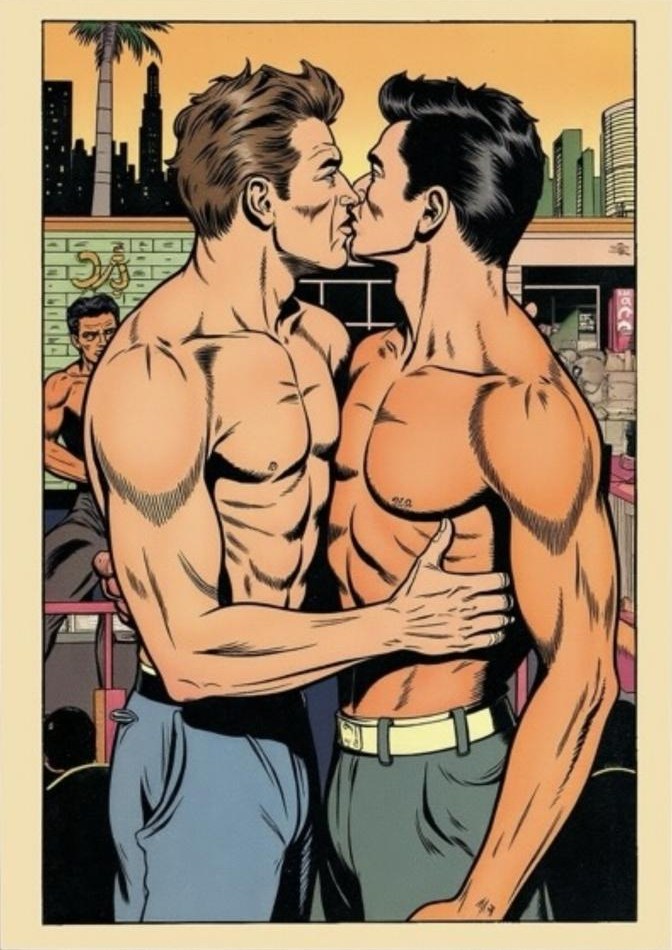
Vintage gay bandana
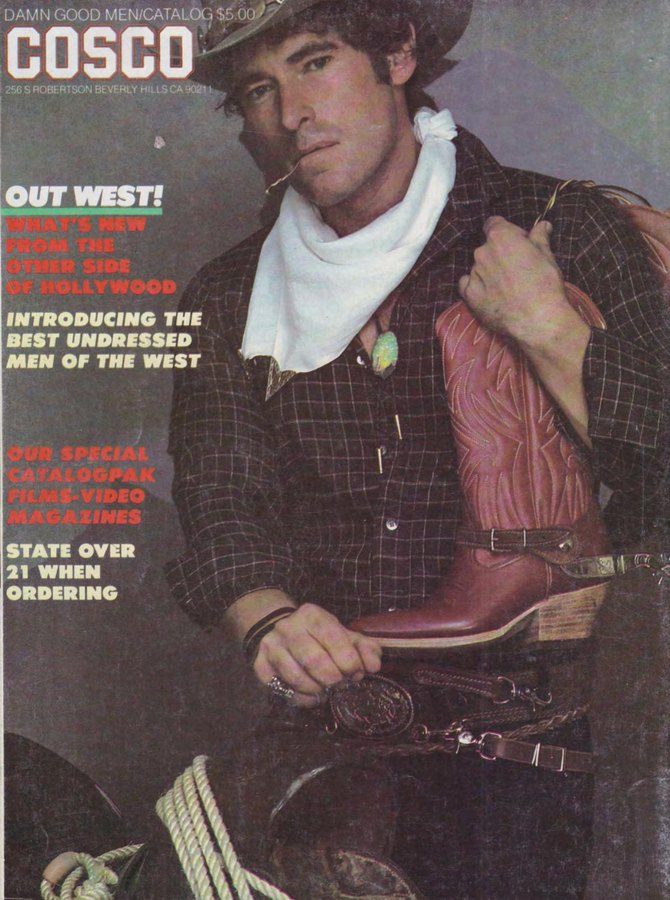
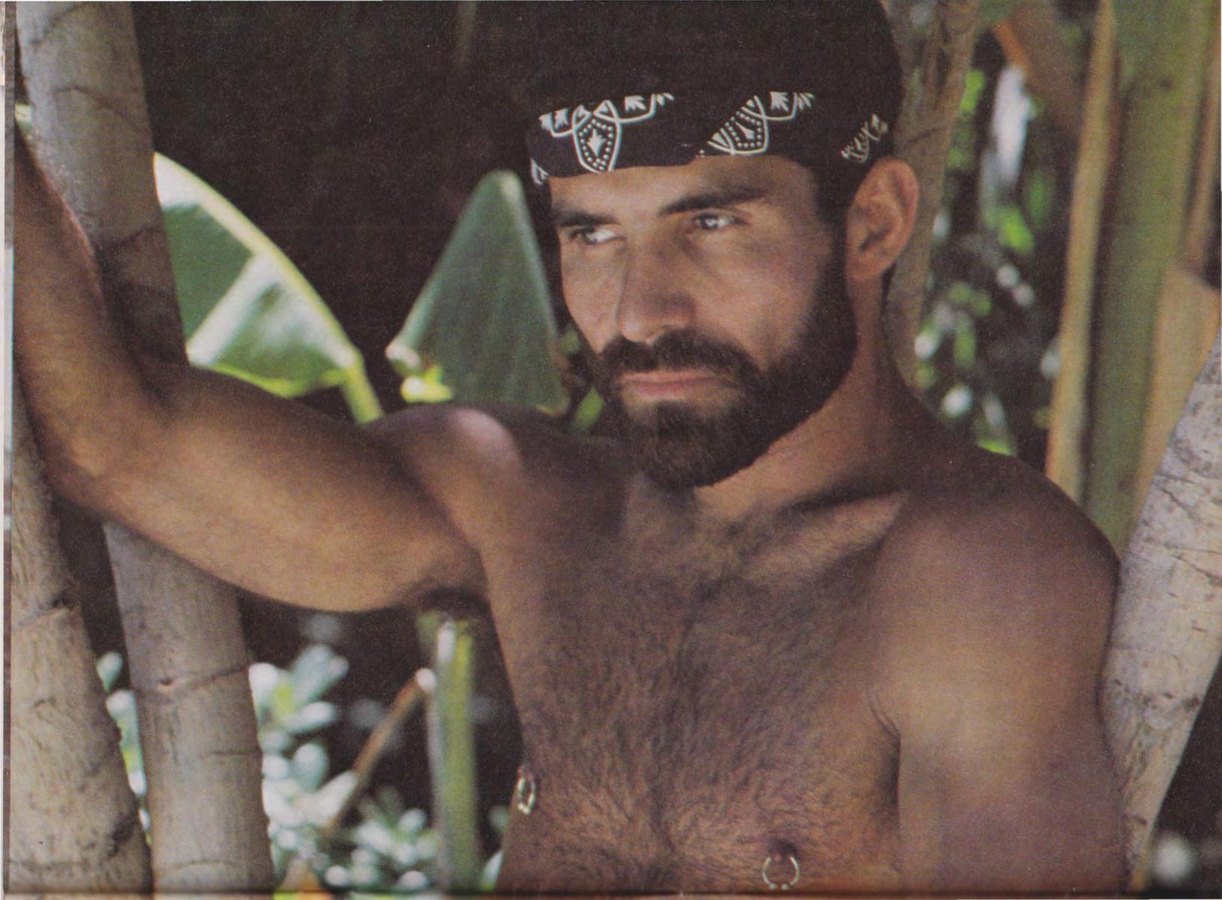
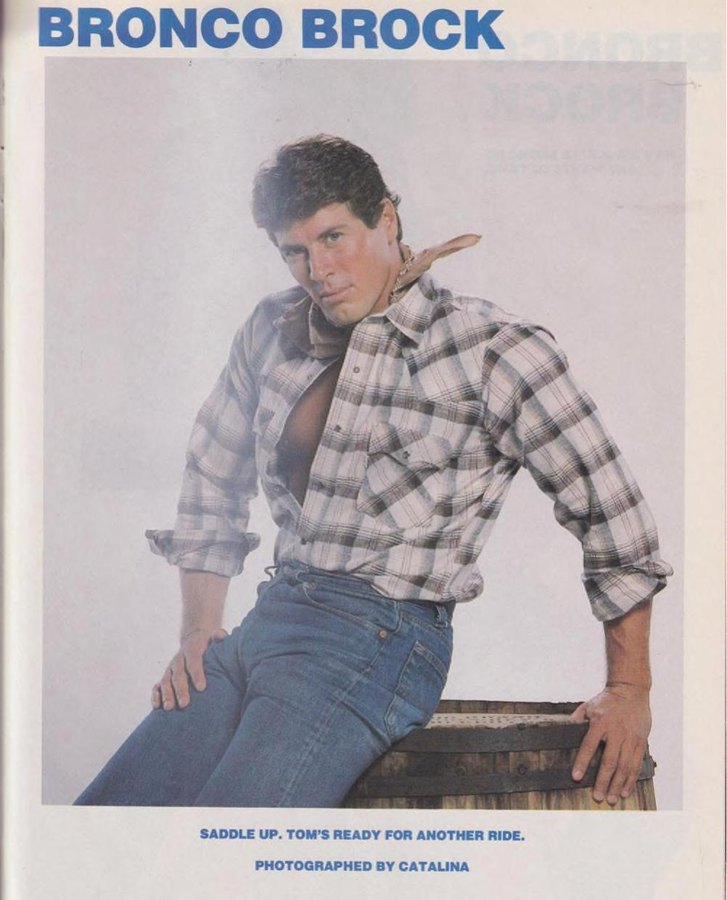
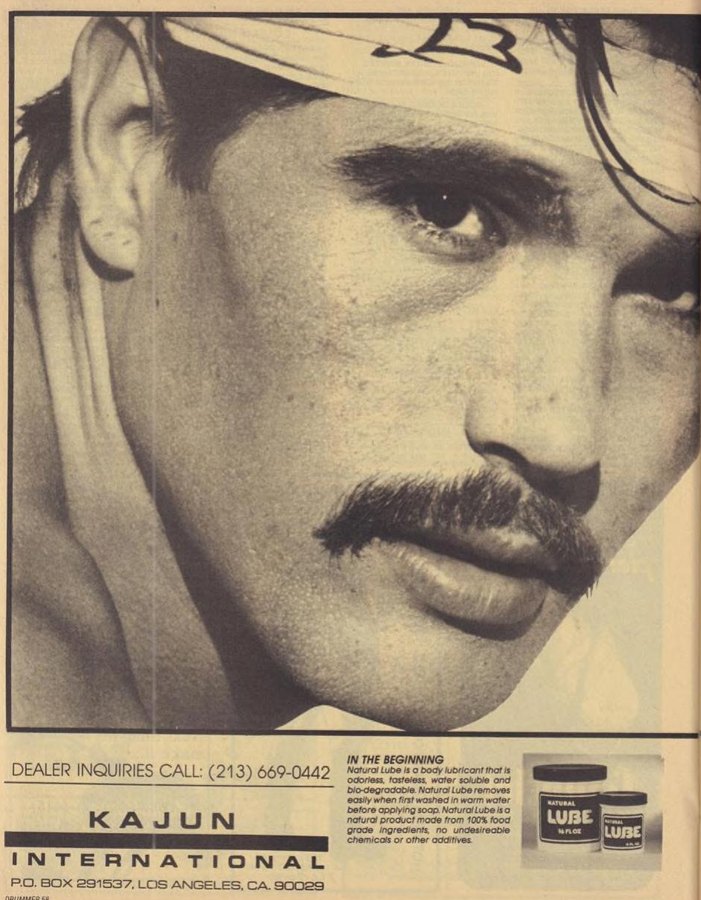
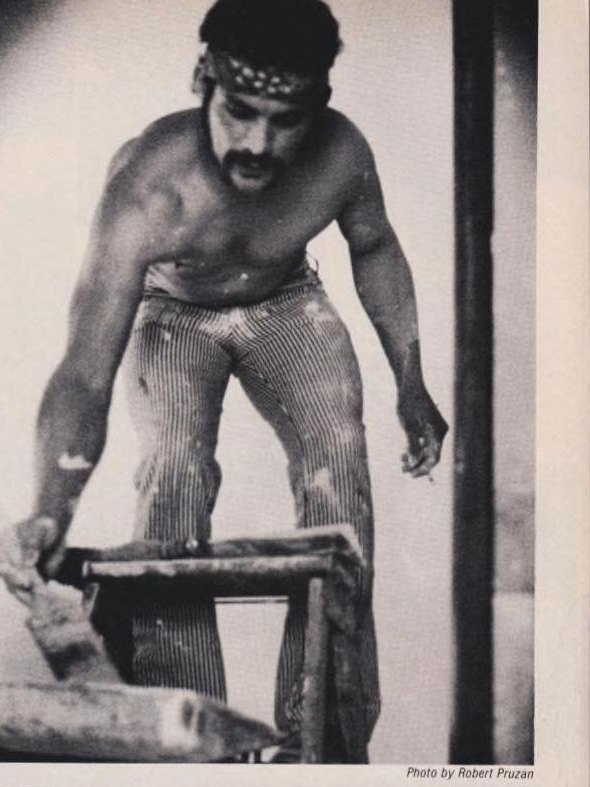
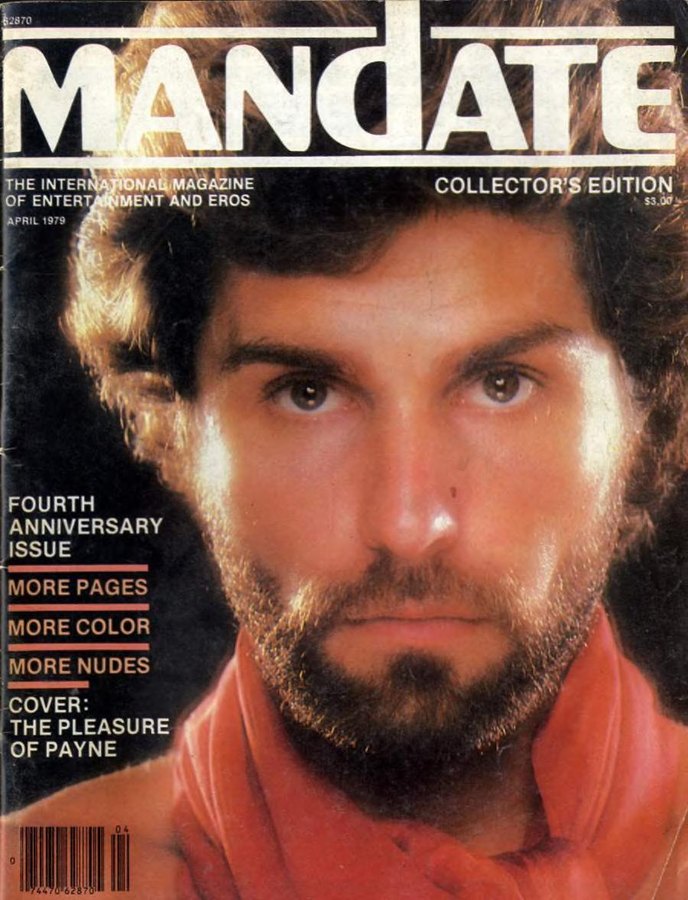
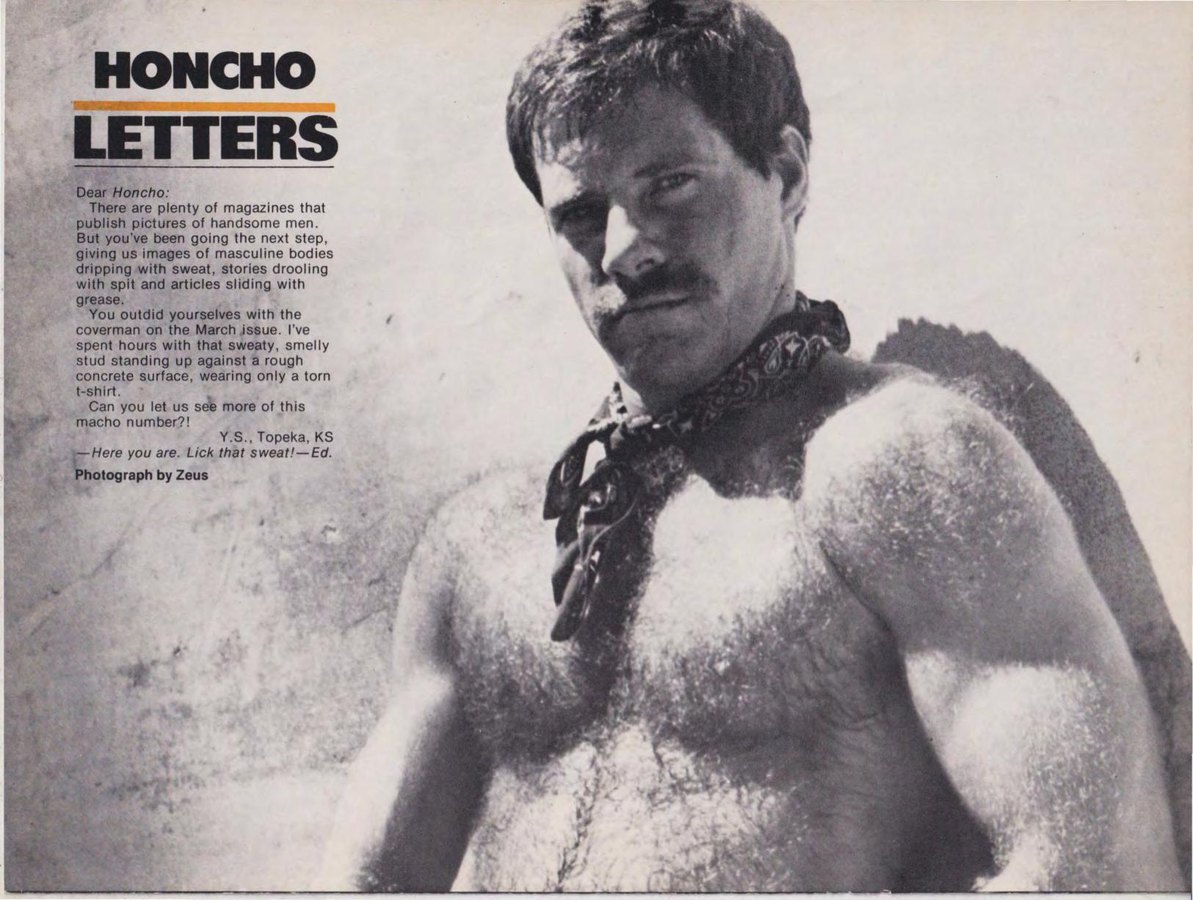
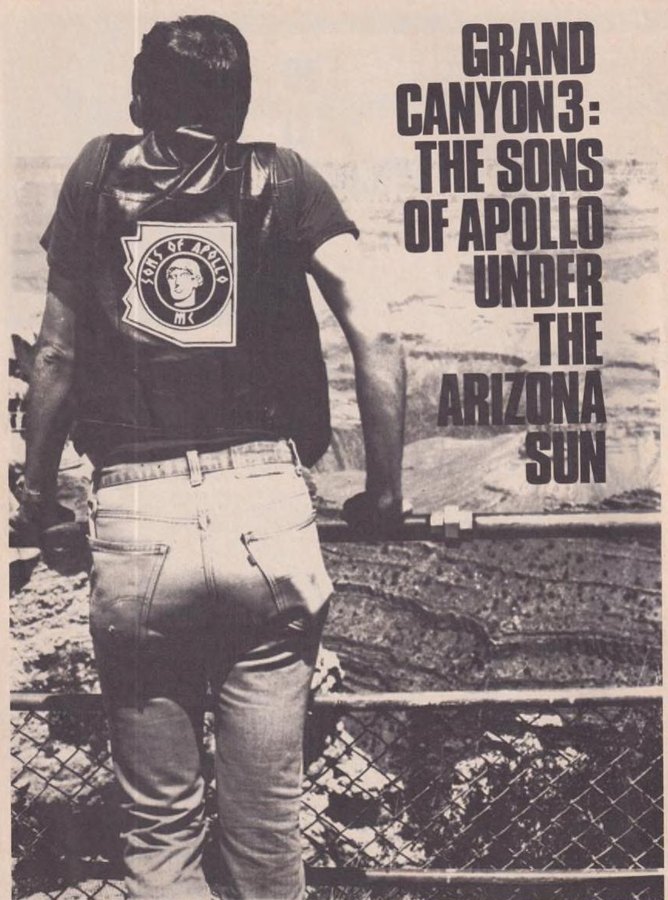
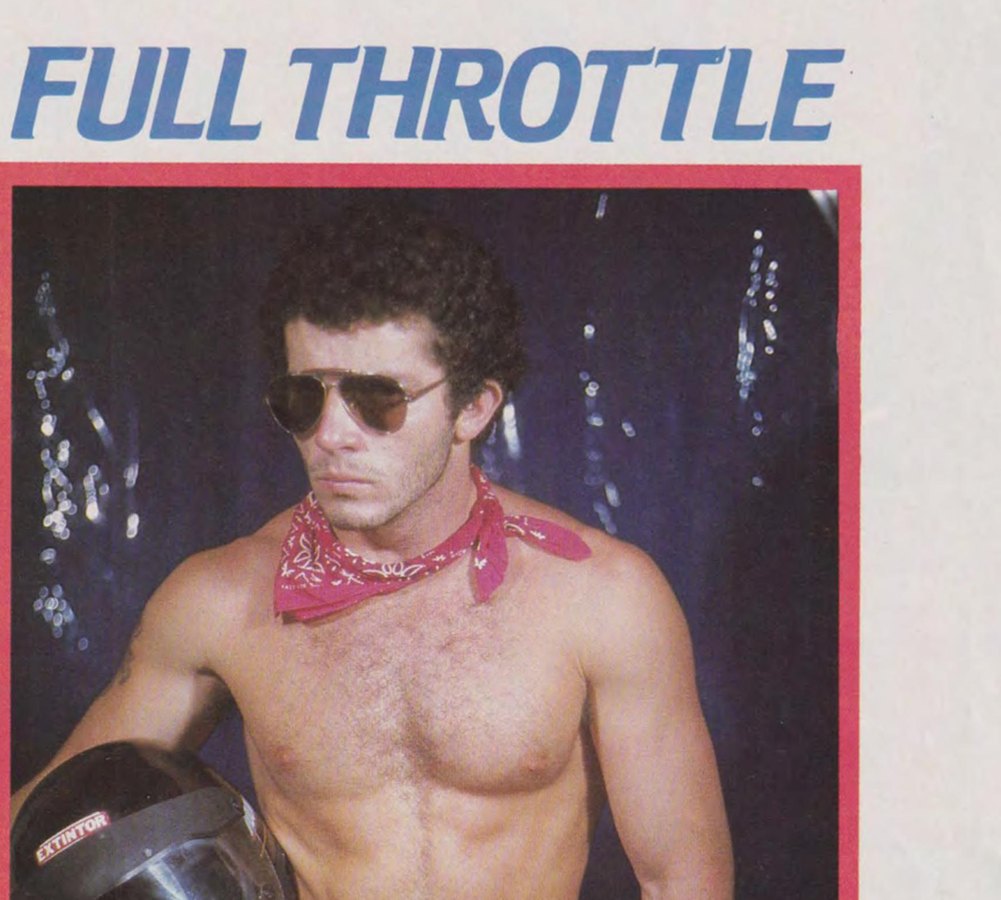
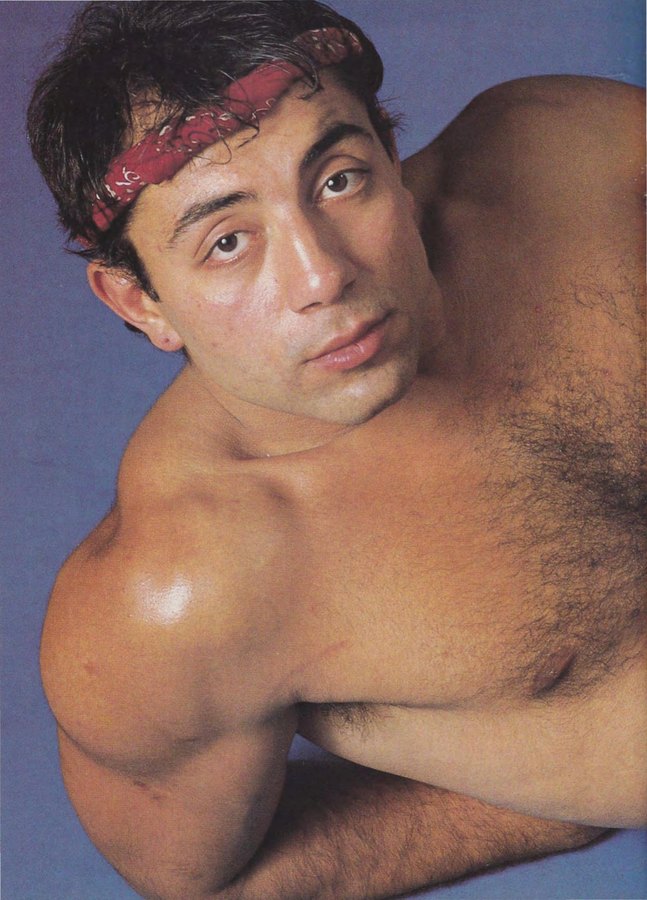
Vintage gay bandana photos show the knotted cotton square that cowboys, railroad engineers and miners wore across the 19th-century American West, taken up by gay magazines as shorthand for rugged masculinity. In the 1970s the bandana also became a signal: the handkerchief code, said to have started in New York around 1970 and spread by printed color cards from San Francisco's Trading Post around 1971, used color and pocket side to say what a man was looking for, and Bob Damron's Address Book printed a color chart around 1980. The plates here, from 1980 to 1988, wear it at the throat: Zeus's photo on the Honcho Letters page of May 1980, the Sons of Apollo rider at the Grand Canyon in Drummer 47, Robert Laliberte's dude-ranch cowboy in 1987, Catalina's 'Bronco Brock' and Christopher Rage's 'Piper' in 1988.
The handkerchief code (hanky code) is a system of colored bandanas worn in the left or right back pocket that gay men, especially in leather circles, used from the early 1970s to signal their interests, with origins credited to both San Francisco and New York.
The handkerchief code is a way of signalling interests without speaking: a colored bandana in a back pocket, its color naming a preference and its side, left or right, indicating which role the wearer took. It grew out of an existing custom of wearing a ring of keys on the left or right to mean top or bottom. The code is closely tied to the leather scene: its best-known origin story begins in leather shops, and leather magazines printed its charts. Early charts listed about a dozen colors, but the Leather Archives and Museum says most people used six to eight.
- Also called
- Hanky code, bandana code
- Emerged
- Early 1970s, San Francisco and New York
- Credited to
- Alan Selby (Mr. S Leather) with Ron Ernst and Pat O'Brien of Leather 'n' Things, 1972 (disputed)
- Early printed charts
- Village Voice (early 1970s); Drummer (1977)
- Colors listed
- About a dozen in early charts; 71 colors and objects by 1993




Quick answers
What is the gay hanky code? A 1970s system in which a colored handkerchief or bandana in the back pocket signaled a man's interests, with the left pocket and the right pocket meaning opposite roles. Black, for example, stood for S&M and grey for bondage.
Where did the hanky code come from? Accounts differ. One credits a Village Voice writer's joke around 1970 in New York; another credits San Francisco's Trading Post, which printed color cards around 1971. Alan Selby of Leather 'n' Things later claimed he created a code in 1972, which other sources dispute.
Why do bandanas show up so often in vintage gay magazines? The bandana was a working garment of the American West, so it carried the cowboy and laborer look that gay magazines of the 1970s and 1980s prized, and readers also knew it from the hanky code.