Searches for gay art come close to ten thousand a month on Etsy alone, up more than a fifth in a year. Most of what comes up is new. The good stuff is old, and it was made under conditions that would have finished most artists: illegal subject matter, a hostile post office and an audience that had to pretend it was interested in fitness. Here is the century, fast.
1890s: the strongman
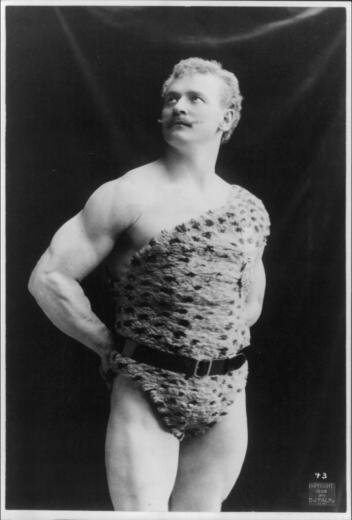
Eugen Sandow was the first celebrity bodybuilder, and photographs of him in a scrap of animal skin sold in huge numbers. Officially they were about health. Unofficially, a lot of men bought them for the same reason they would buy Physique Pictorial sixty years later.
1905 to 1930s: the illustrator
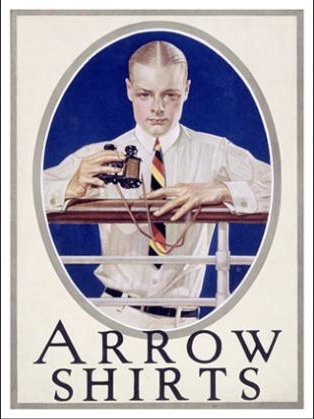
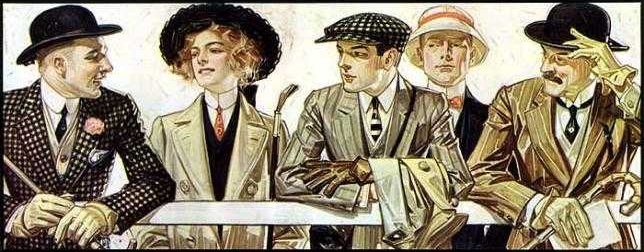
J. C. Leyendecker painted the Arrow Collar Man, the most famous male face in American advertising, and modeled him on his partner, Charles Beach. The two lived together for decades in New Rochelle. Millions of people saw a love letter every time they opened a magazine. Read the full story.
1945 to 1965: the physique era
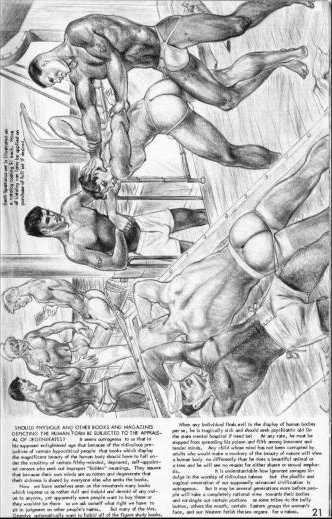
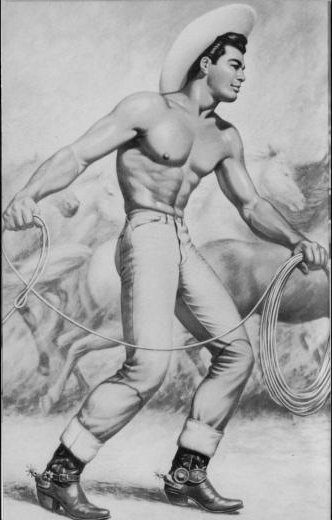
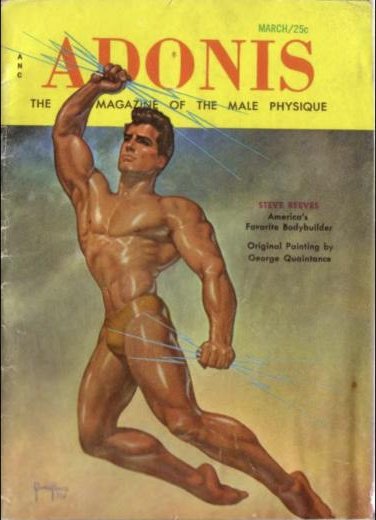
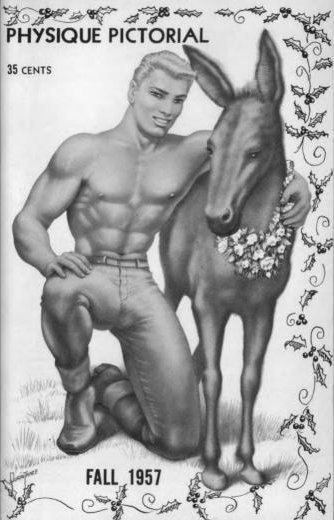
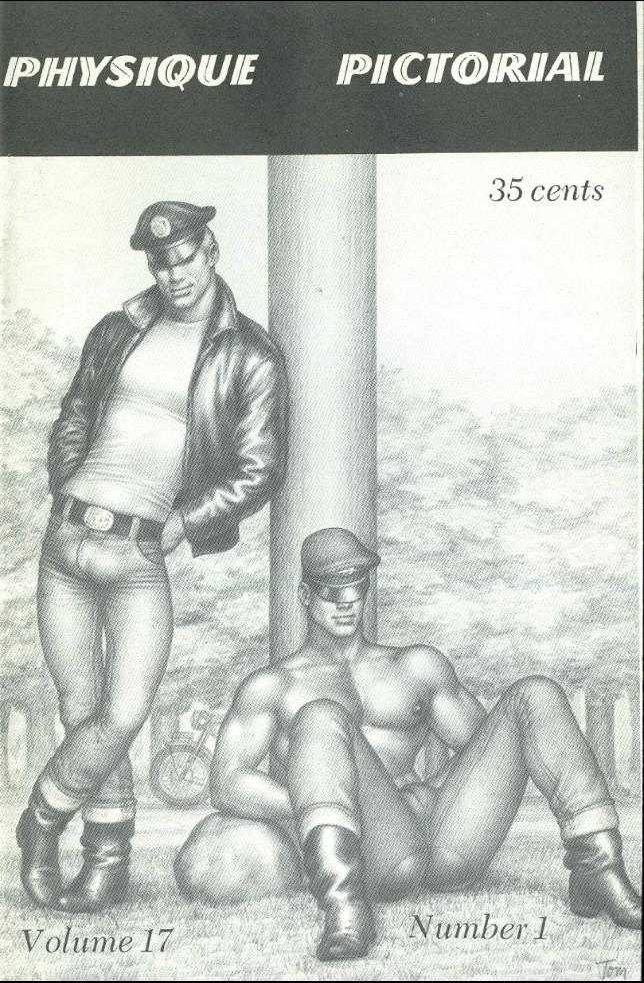
After the war, small magazines sold muscle as health and art. George Quaintance painted the first cover of Physique Pictorial in 1951; its editor Bob Mizer gave Tom of Finland his name in 1957; and in 1962 the Supreme Court ruled that physique magazines were not obscene. See the cowboys, Tom of Finland's debut and the size queens.
1964: sex and politics on the same page
In October 1964 the Philadelphia activist Clark Polak launched Drum, which mixed news, satire, comics and male nudes. Newsstand copies stayed clothed; subscribers got the extra pages. Polak said he wanted to be Hugh Hefner rather than Martin Luther King, and for a few years he nearly managed it.
1970s: the glossies
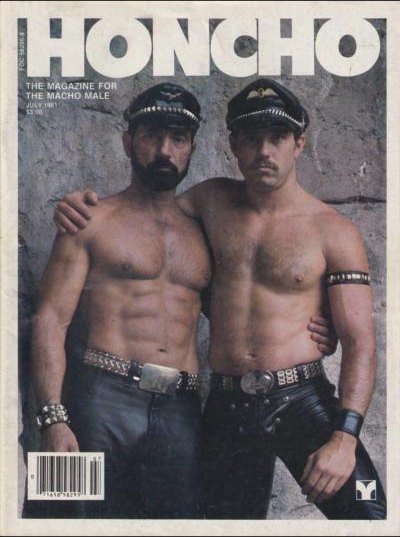
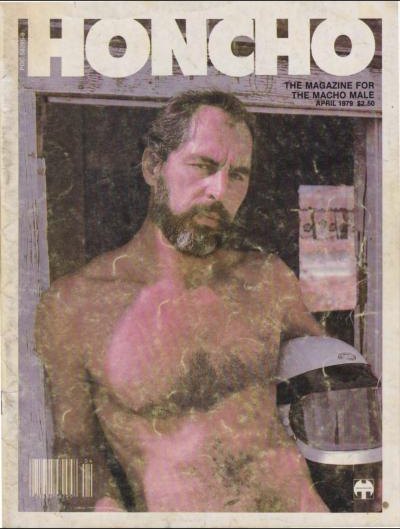
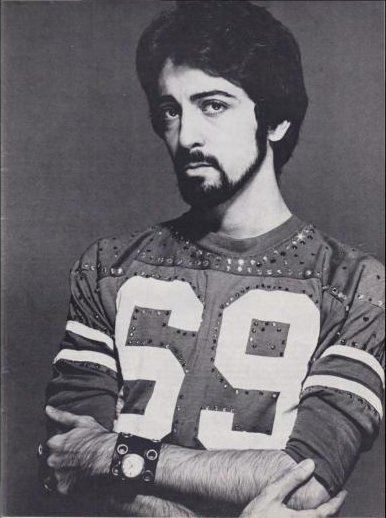
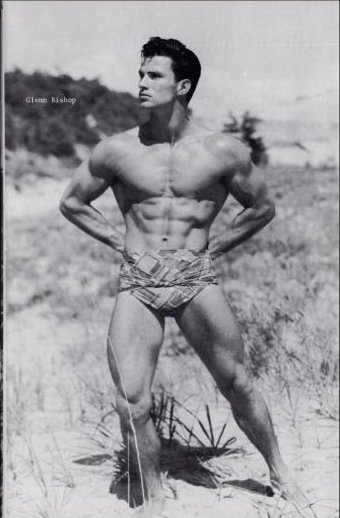
After Stonewall the magazines came out of the brown envelope. Blueboy began in 1974 and was selling 150,000 copies a month by 1978; Mandate launched in April 1975, Drummer in June 1975 and Honcho in April 1978. This is the decade of the mustache, Fire Island and the bookstore.
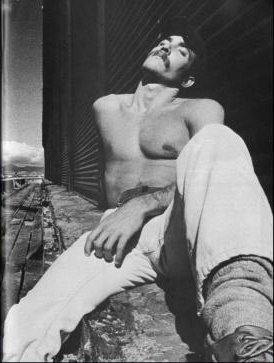
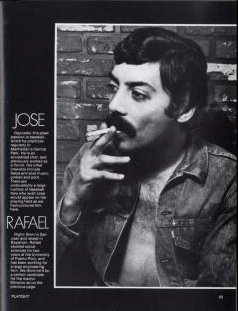
1980s: leather and the clubs
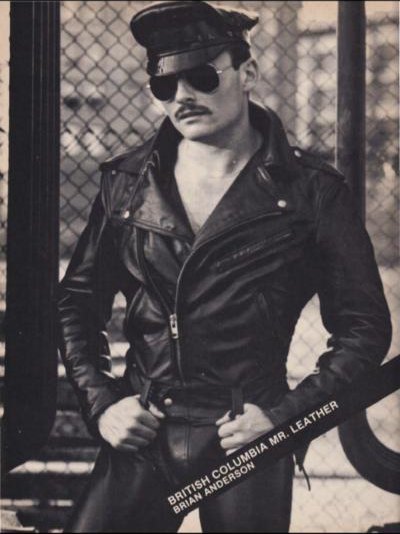
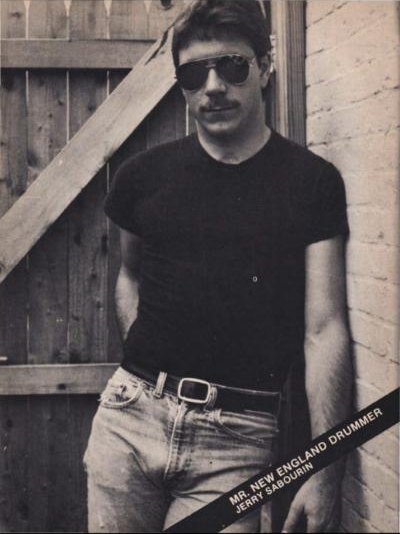
Leather went mainstream inside the community, with contests like Mr. Drummer, and when AIDS arrived the jack-off clubs turned safer sex into a social life. That story is here.
Where to see it right now
You do not have to take our word for it. This season, the Columbus Museum of Art is showing Queer Constellations, about 150 photographs by 75 artists from the Aronowitz family collection, co-curated by Vince Aletti, through March 21, 2027. The Bob Mizer Foundation has a show of Russ Warner's censored physique work, Muscle on Trial, opening December 3. And this fall Paris got 77 Bruce of Los Angeles rodeo photographs at Acne Paper.
How to start a collection
Pick an era before you pick a picture. Physique-era prints (1945 to 1965) are black and white, funny and very hangable; 1970s glossies bring color and mustaches; anything before 1931 is public domain in the United States, so Leyendecker and Sandow can be printed big without anyone's permission. Mix one era with one joke and you have a wall. Here is how to hang it.
Now
In 2026 the old work is everywhere: museum shows, auction records, a Met Gala look inspired by Tom of Finland. Homoerotic art is one of the fastest-rising searches on the art marketplace Catawiki. Here is why. And the whole archive is on the Wall.