
The lighting diagram
Camera, film, developer and the light setup for a double exposure, all written out.
This is the photographer's working method laid bare. A four-panel diagram from Artistry in Physique Photography (April 1956) shows how a double exposure was made: a spot light and black background for the body, a ground glass masked diagonally for the body and then for the head, and a boom light and key light for the portrait. Below, two columns headed DATA BODY and DATA HEAD list the equipment for each pass: a Speed Graphic camera, a Wollensak lens, Royal Pan film, exposure times and apertures, developer, Opal G paper, an Omega D-2 enlarger, light-to-subject and camera-to-subject distances, and a black paper roll background. A note explains that the ground glass was masked with wax, then the masking reversed for the head. Few physique publications showed their technique this openly, and it reads now as a document of mid-century studio practice.
- Published in
- Artistry in Physique Photography
- Date
- Apr 1956
- Held by
- Internet Archive
- Rights
- In copyright; shown for history and commentary
- Original
- See the source scan
From this issue
More like this
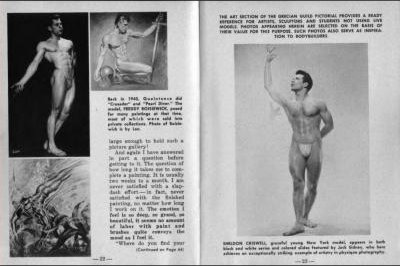 Art section, with Quaintance
Grecian Guild Pictorial, Spring 1956
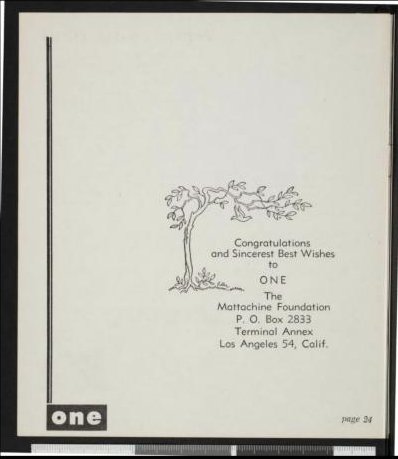 Best wishes from Mattachine
ONE, Jan 1953
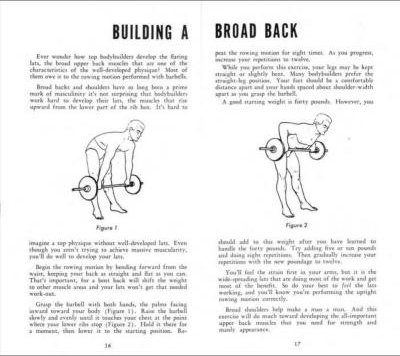 "Building a Broad Back"
Trim, May 1957
 Bill McLeod, USS Winston
Physique Pictorial, 1955 (pub. Feb 1968)
 The All New Leatherman's Guide! by Bruce Werner
Drummer, 1977
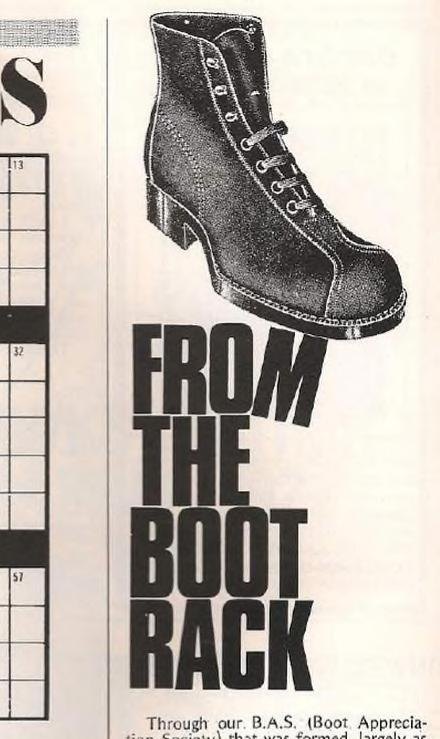 From the Boot Rack
Drummer, 1977
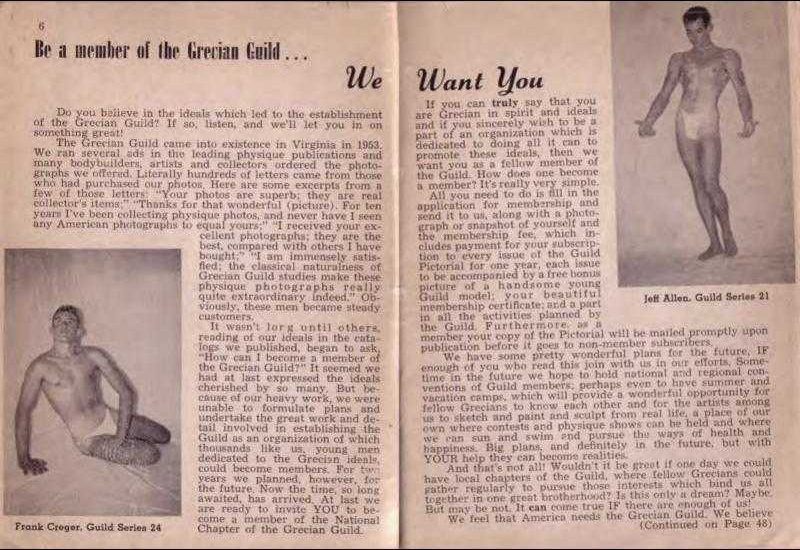 "We Want You" - Grecian Guild
Grecian Guild Pictorial No. 1, 1955
 "On Growing Old"
Body Beautiful, 1955